


Paid Ads
Turn ad spend into measurable growth with targeted campaigns across platforms

Take charge of your online reputation. Using cutting-edge software, our in-house SEO experts, professional writers, legal tools, and advanced algorithm knowledge, we can craft a plan to promote the content you want visible while pushing negative content off the first page.
The average Google Search session is just under 1 minute. This means that within 1 minute the average user has already made
Up to 72% of people will make a decision to avoid you upon finding negative content online; and
88% of consumers trust online content as much as a personal recommendation.
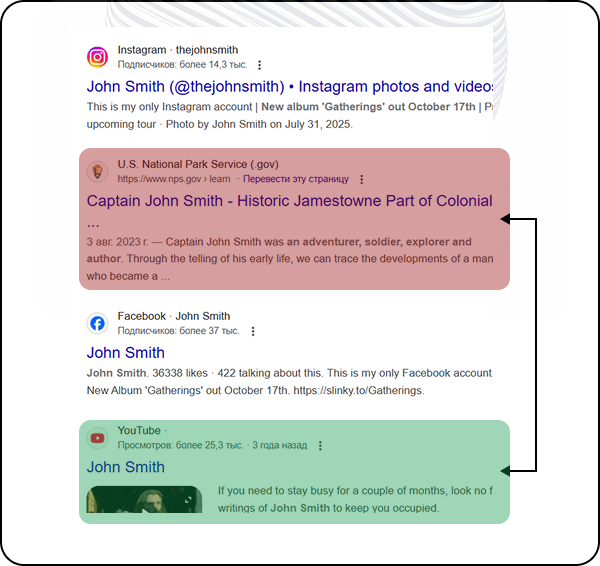
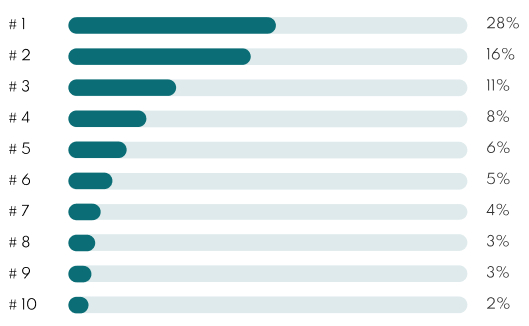
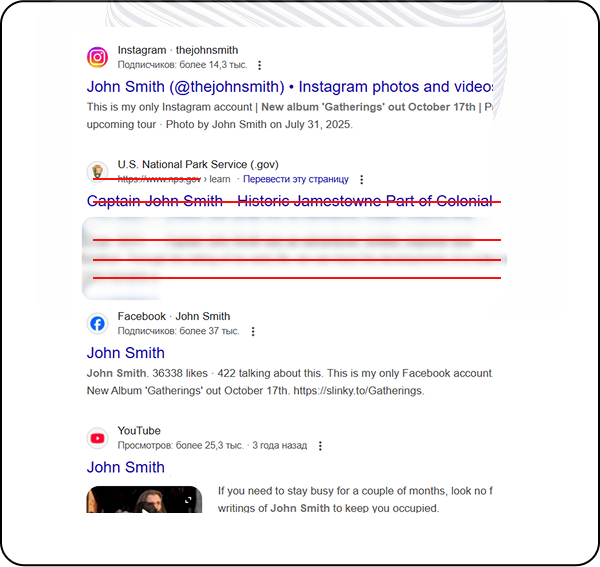
If bad press ranks in the first few positions of Google for your brand or name, it's a major problem because most users never scroll past the first few results—and click-through rate (CTR) becomes a key signal that can either help bury the bad press or make it stick longer.
| Option | Effectiveness | Cost |
| #1.Waiting For Negative Articles To Naturally Fall Off The First Page | Low | Free |
| #2.Submit a DMCA (Digital Millennium Copyright Act) Takedown Notice on Google | Low | Free |
| #3. Hire an SEO Expert ⭐️Ross Kernez ⭐️ to Clean Your Name or Brand | High | $$ |
| #4. Reaching Out To Journalists to Remove Content from Google Search | Low | Free |
| #5. Explore Legal Strategies to Remove Negative Content Online | Medium | $$$ |
| #6. Requesting an Update To a Negative Article Via Email Outreach | Low | Free |
In today’s hyper-connected marketplace, hoping Google’s freshness algorithm will eventually bury hostile headlines is a risk no brand—or prominent individual—can take. As long as a negative article keeps drawing clicks, shares, or backlinks, its date is irrelevant; engagement signals lock it onto page one, jeopardizing your credibility, investor confidence, and future partnerships.
Our online reputation management team fills the gap algorithms leave. We publish timely, authority-building content in multiple languages, optimize every digital asset you control, and react instantly to new mentions—pushing damaging coverage off the first page before it can take root. Continuous monitoring means fresh negativity is neutralized the moment it appears, while positive narratives stay current, visible, and fully aligned with your dynamic business landscape.
When a regional news outlet or global blog republishes your proprietary content, immediate action is essential to protect your brand in today’s competitive market. Start by capturing the infringing URLs and taking dated screenshots or archived copies that clearly establish your ownership. Next, access Google’s copyright-removal portal (support.google.com/legal/troubleshooter/1114905) and select the relevant product—Search, YouTube, Images, and more. Complete the form with your contact details, a precise description of your original work, the infringing links, and a sworn statement confirming your rights. Google will review the claim and may request additional information; timely responses keep the process on track. Once validated, the offending URLs are delisted, cutting off traffic to the stolen content and reinforcing your online reputation.

When you partner with reputation-focused SEO strategist Ross Kernez, you secure an ally who knows how to tilt Google’s scales toward your success. Ross deploys a multi-layered program—language-specific news placements, freshly built microsites, high-impact press releases, and synchronized social-media campaigns—engineered to lift favorable coverage until it overshadows any hostile links. Every action is bespoke: Ross audits the keywords, publications, and social channels that influence decision-makers in your marketplace, then powers a content engine that keeps your best headlines front and center while quietly relegating negative results beyond page one.
Outsourcing this mission safeguards your time, reputation, and revenue. Online reputation management demands 24/7 vigilance, technical precision, and culturally sensitive storytelling. By entrusting the task to Ross, you stay focused on growth rather than chasing algorithms. Behind the scenes he leverages enterprise-grade analytics, competitive-intelligence suites, and real-time monitoring dashboards—spotting threats early, fine-tuning tactics on the fly, and delivering clear, data-rich progress reports.
Because Ross operates at the intersection of SEO, PR, and data science—and tracks Google’s frequent core updates—his strategies evolve as quickly as the algorithms. Whether you face an unflattering article, a viral rumor on social media, or a sudden SERP shake-up, he adapts, neutralizes, and re-anchors your digital narrative. The result: when someone searches your name, they discover the story you’ve worked hard to craft—exactly as you intend.
Reaching out to a journalist—or any outlet—to address unfavorable coverage calls for tact, cultural awareness, and a clear, evidence-backed request. Start by identifying the reporter and publication, then review their published correction or update policies so your appeal respects their editorial standards and local media guidelines. In your personalized email (never a form letter), acknowledge the journalist’s commitment to accurate reporting and explain—supported by concise, verifiable proof—why the article is outdated, misleading, or factually incorrect. Supply documentation or recent developments that present a fuller, more current picture; if the facts remain sound but the piece is stale, politely propose an update highlighting your latest milestones. Offering an exclusive angle, interview, or data set turns your request into a win-win, giving the reporter fresh content while reducing the impact of the original story.
Maintain a professional, empathetic tone at every step; journalists are not obliged to revise or retract, and courteous collaboration is far more effective than confrontation. If direct dialogue stalls, fold the effort into a broader Crisis Communications & Reputation Management strategy—whether that means consulting legal counsel under applicable copyright and defamation statutes or engaging a dedicated ORM specialist who can pursue additional mitigation paths across diverse media landscapes and languages.
Taking a publisher to court under strict defamation and cyber-crime statutes may sound like a clean solution, yet lawsuits seldom deliver the blank slate clients envision. Proceedings are costly, protracted, and emotionally exhausting—stretching over months or even years of filings, expert reports, and legal fees—with no guarantee the offending content will disappear. Worse, the moment you file, the disputed story can roar back into the spotlight as media outlets cover the case, triggering the very Streisand-effect surge you hoped to avoid. The legal threshold is steep: you must prove the statements are false, damaging, and published in bad faith—an especially high bar when opinion or nuanced language is involved. Even a courtroom win often leaves the article online, now indexed alongside fresh headlines about the lawsuit itself, and it may sour future relations with journalists who see you as litigious.
A smarter route for brands and public figures is proactive Crisis Communications & Reputation Management. By correcting inaccuracies directly with editors, amplifying factual, positive narratives in multiple languages, and dominating search results with fresh, authority-building content, you can shift public perception without igniting a legal spectacle. This forward-looking strategy safeguards your image today while preserving the media relationships and goodwill your future growth depends on.
When seeking an update from a journalist—whether local or international—lead with tact, transparency, and hard evidence, not confrontation. Begin your message by acknowledging the reporter’s professionalism and commitment to accurate journalism, then supply clear, verifiable proof that the piece is outdated, unbalanced, or factually incorrect. Strengthen your case with recent milestones, corrected data, or fresh context the original article overlooked—ideally in the languages most relevant to their audience.
Frame your request as a shared pursuit of accuracy, not an attempt at suppression; this collaborative tone cultivates goodwill and makes it easy for the writer to refine the story. The payoff is a more balanced article that safeguards your reputation while enhancing the publication’s credibility—quietly pushing negative search results out of the spotlight and reinforcing your standing in today’s competitive media landscape.


